

Your goods just failed a temperature check — or you’re about to book a mover and realized a standard van won’t cut it for what you’re shipping. Chiller vans exist for exactly this problem, and the difference between choosing one and skipping it usually shows up in your bank account before it shows up anywhere else.
Quick Answer: A chiller van keeps goods between roughly +2°C and +8°C throughout transit, which prevents spoilage, meets compliance rules for food and medicine, and avoids the fixed cost of buying a refrigerated vehicle. Renting one is typically cheaper than fleet ownership for anyone moving temperature-sensitive goods occasionally or seasonally in the UAE.
What You Need to Know:
- A chiller van holds +2°C to +8°C; a freezer van holds around -18°C — they are not interchangeable for compliance purposes.
- Spoilage from an unrefrigerated move can cost more than a season of chiller van rentals combined.
- UAE food and medicine transport rules increasingly require documented temperature control, not just “it stayed cool.”
- Renting beats buying if you move temperature-sensitive goods fewer than roughly 15–20 times a year.
- Booking 48–72 hours ahead avoids last-minute availability issues during Ramadan and summer peak season.
What Is a Chiller Van, and How Is It Different From a Freezer Van?
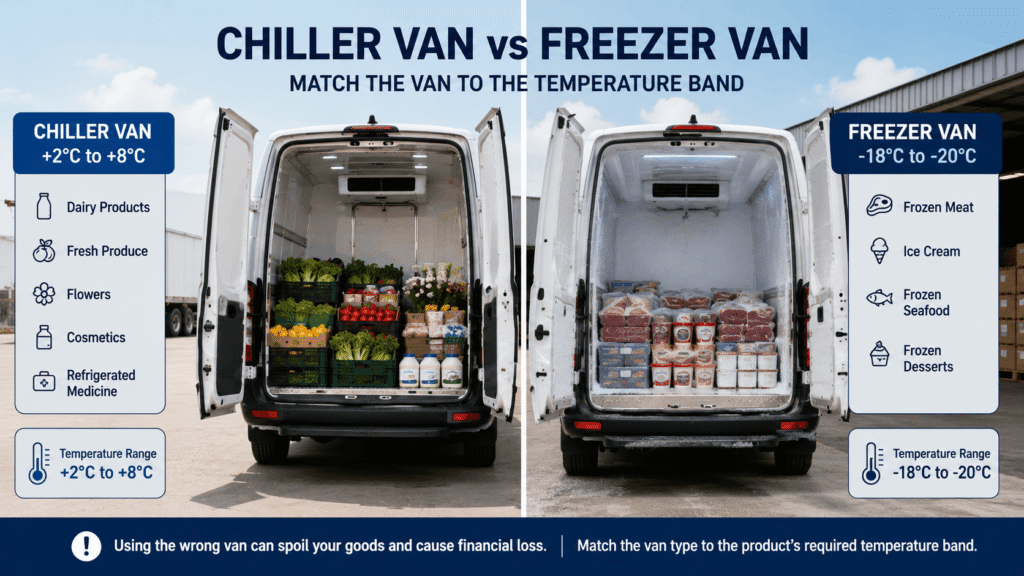
A chiller van is a refrigerated vehicle built to hold goods at +2°C to +8°C, the range used for dairy, fresh produce, flowers, cosmetics, and most refrigerated medicine. A freezer van runs colder, typically -18°C to -20°C, for frozen meat, ice cream, and items that must stay solid.
The mistake people make is treating “refrigerated” as one category. It isn’t. Frozen goods loaded into a chiller van will soften or spoil; chilled goods loaded into a freezer van can freeze-damage and become unsellable. Matching the van type to the product’s required temperature band is the single decision that determines whether the shipment survives the trip.
Reason 1: Precise Temperature Control Protects Perishable Goods
A chiller van holds a narrow, monitored temperature band the entire trip, not just at loading. Standard vans have no insulation or active cooling, so internal temperature tracks outside air — a serious problem in UAE conditions where ambient heat regularly exceeds 40°C in summer.
Dairy, produce, cut flowers, and pharmaceuticals degrade fast outside their required range. A 30-minute delay in 45°C heat inside an unrefrigerated van can push perishable cargo past a safe temperature threshold that no amount of icing at the destination can reverse. Chiller vans hold the line for the whole route, including loading and unloading stops.
Reason 2: Prevents Spoilage-Related Financial Loss
Spoiled stock isn’t just wasted product — it’s wasted product plus the delivery cost plus, often, a damaged relationship with the client who received it. A single spoiled batch of pharmaceuticals or fresh produce frequently costs more than several chiller van bookings combined.
This is the calculation worth doing before you decide: compare the rental cost of a chiller van against the retail or replacement value of what you’re moving. For most temperature-sensitive shipments, the spoilage risk alone justifies the rental cost, independent of any compliance requirement.
Reason 3: Meets Compliance Needs for Medicine and Food Transport
Pharmaceutical and food transport in the UAE increasingly requires documented temperature control, not informal assurance. Cold chain guidance for medicines — including the principles behind the World Health Organization’s Good Distribution Practices (GDP) — expects continuous temperature monitoring from dispatch to delivery, and food safety authorities apply similar expectations to perishable food transport.
A standard van gives you no way to prove any of this. A chiller van with a temperature log gives you a paper trail if a client, regulator, or supplier ever asks how the goods were kept. For medicine specifically, this isn’t a nice-to-have — it can be the difference between a delivery being accepted or rejected on arrival.
Reason 4: Flexible Rental Beats Buying Your Own Refrigerated Fleet
Buying a refrigerated van means paying for maintenance, driver training, insurance, and depreciation whether you use it twice a week or twice a year. For most small and mid-sized UAE businesses moving temperature-sensitive goods occasionally — a seasonal produce run, a one-off pharmacy relocation, a batch delivery — renting is the cheaper option by a wide margin.
Renting also means the van is maintained and temperature-tested by someone else before you ever load it, which removes an entire category of risk from your side. This is where equipment choice matters: a chiller van rental service like Chill Freeze exists specifically to cover this gap — occasional, reliable access to a properly maintained refrigerated vehicle without the fixed overhead of owning one.
[CONTENT GAP: link to a chiller van pricing/booking page — none exists on chillfreez.com yet. Recommend building “Chiller Van Rental Pricing in Dubai/UAE” before driving conversion traffic here.]
If you’re weighing whether occasional rental or fleet ownership makes sense for your volume, that’s worth working out with real numbers before committing either way — happy to send you a simple comparison if you’re on our list.
Reason 5: Reduces Handling Time and Delivery Delays
A chiller van is built for cold-chain logistics specifically, which means faster loading through insulated doors, pre-cooled cargo areas, and drivers used to handling temperature-sensitive freight. A standard van driver improvising with ice packs adds handling time and risk at every stop.
Less handling time means less time perishable goods spend outside their safe temperature range, which compounds the protection from Reason 1 rather than duplicating it.
Which Goods Need a Chiller Van vs. a Freezer Van?
Save or screenshot this table — it covers the most common shipment types businesses in the UAE move by refrigerated transport.
| Goods Type | Required Temp Range | Van Type | Typical Transit Tolerance |
|---|---|---|---|
| Fresh produce | +2°C to +8°C | Chiller | Low — degrades within hours if broken |
| Dairy products | +2°C to +6°C | Chiller | Low |
| Cut flowers | +2°C to +8°C | Chiller | Moderate |
| Refrigerated medicine | +2°C to +8°C | Chiller | Very low — compliance-sensitive |
| Frozen meat/seafood | -18°C to -20°C | Freezer | Very low — refreeze damages quality |
| Ice cream / frozen desserts | -18°C to -23°C | Freezer | Very low |
| Cosmetics (heat-sensitive) | +2°C to +15°C | Chiller | Moderate |
Common Mistakes to Avoid
Assuming “cold enough” is the same as “correct range.” A van that’s cool but not held at the specific required band still puts sensitive goods at risk — general coolness isn’t compliance.
Booking a chiller van for genuinely frozen goods. This is the single most common mismatch — chiller vans cannot hold -18°C, and frozen cargo will soften in transit even if the van feels cold to the touch.
Skipping the temperature log request. If compliance matters for your shipment — especially medicine — always ask whether the rental includes a temperature record for the trip, not just a claim that it was refrigerated.
Booking last-minute during peak season. Availability tightens considerably during UAE summer months and around Ramadan, when demand for refrigerated transport rises across food and medicine sectors.
FAQs
What temperature does a chiller van maintain?
A chiller van typically holds +2°C to +8°C throughout the trip, the standard range for dairy, produce, flowers, and refrigerated medicine. This is distinct from a freezer van, which runs around -18°C for goods that must stay frozen solid.
How do I know if my goods need chilled or frozen transport?
Check the product’s storage label or supplier guidance — if it says “refrigerate,” it needs a chiller van; if it says “keep frozen,” it needs a freezer van. When in doubt, the safer default for perishable but not frozen goods is chilled transport.
How much does chiller van rental cost in the UAE?
Cost varies by distance, duration, and vehicle size, and depends on current provider rates. [CONTENT GAP: no pricing page exists yet to answer this with real numbers — this FAQ answer should be updated once one is built.]
What certifications should a chiller van rental company have?
Look for documented temperature monitoring, driver familiarity with cold-chain handling, and — for medicine transport specifically — alignment with recognized cold chain guidance such as WHO Good Distribution Practice principles. Ask directly whether a temperature log is provided per trip.
What happens if temperature control fails mid-delivery?
A reliable provider will have a monitoring system that flags a deviation in real time, allowing rerouting or replacement before goods are compromised. Ask any provider what their failure protocol is before booking, not after something goes wrong.
What to Do Next
If your goods specifically need frozen (not chilled) handling, read Optimizing Frozen Food Management in a Chiller Van next — it covers the frozen-goods side of this decision in detail.
If you’re moving medicine rather than food, Medicine Delivery Van Rental in Dubai: What You Need to Know covers the compliance specifics that apply to pharmaceutical transport.
Pingback: Chiller Van Rental Cost in Dubai: 2026 Price Guide
Pingback: Why Dubai Businesses Rely on Chiller Vans for Deliveries
Pingback: What Is a Chiller Van? How It Works & Keeps Goods Cold